+86-13735376777 tosenauto@gmail.com


Engine failure forces a critical procurement decision. You must choose between a stripped-down core and a fully assembled powertrain. This choice dictates the success of high-performance projects. It also directly impacts routine daily driver repairs. Choosing incorrectly leads to immediate budget blowouts. You might face massive hidden labor costs. Your vehicle's reliability could plummet. You need a clear understanding of these distinct automotive components. This definitive guide helps you evaluate your options carefully. We weigh upfront pricing against comprehensive lifecycle expenses. You will discover the implementation risks involved in each path. We also clarify the exact timeline implications for commercial and private garages. By the end, you will confidently select the right mechanical foundation. Every mechanic faces this crossroads eventually. Evaluating the specific needs of your chassis is paramount. Let us dive into the mechanics and economics of modern engine replacement.
A car bare engine offers maximum flexibility for a custom engine build but carries significant hidden labor and machining costs.
Complete engine assemblies provide turnkey reliability, minimizing mechanic labor hours and commercial equipment downtime.
Upfront price is deceptive: transferring old accessories to a bare block often eclipses the premium paid for a fully assembled unit.
The decision ultimately hinges on four criteria: existing usable parts, technical expertise, budget structure (parts vs. labor), and acceptable vehicle downtime.
You cannot make an informed purchase without understanding industry-standard terminology. Mechanics and suppliers often use terms interchangeably. This creates confusion for buyers. We must establish clear definitions to align your expectations. The automotive aftermarket categorizes replacement blocks into distinct tiers. Each tier offers a different level of completeness.
The foundation of any motor is the bare engine block. It acts as the fundamental core. It contains no rotating assembly. You will not find a crankshaft, connecting rods, or pistons here. It also lacks cylinder heads. This unit is strictly a blank canvas. Machinists use it as a starting point for highly specialized projects.
Moving up the spectrum, we encounter short blocks and long blocks. A short block includes the rotating assembly installed inside the main casting. However, it lacks all top-end airflow components. A long block takes this a step further. It adds the cylinder heads and the complete valvetrain to the short block setup. It remains incomplete regarding external accessories.
We then reach the engine without accessories, sometimes called a bare engine assembly. Replacement markets define this as a complete internal motor. It strictly lacks external bolt-ons. You will not receive an alternator, starter motor, fuel injectors, or exhaust manifolds. Finally, a complete engine assembly arrives fully dressed. It includes all internal components, external bolt-ons, sensors, and wiring harnesses. It is a turnkey solution designed for immediate installation.
Engine Replacement Tiers Comparison | |||
Engine Type | Rotating Assembly Included? | Cylinder Heads Included? | External Bolt-ons Included? |
|---|---|---|---|
Bare Block | No | No | No |
Short Block | Yes | No | No |
Long Block | Yes | Yes | No |
Complete Assembly | Yes | Yes | Yes |
Buying a stripped-down motor makes perfect financial and engineering sense in specific scenarios. You must evaluate your specific goals. High-performance tuners represent the primary target audience. Specialized project builders also flock to this option. Buyers holding an extensive inventory of salvageable external parts benefit heavily. If your previous motor suffered localized internal failure, you might possess perfectly good accessories.
Flexibility stands out as the greatest advantage. A custom engine build requires specialized components. Builders hand-select aftermarket forged internals. They install custom turbochargers. They design specific exhaust manifolds to maximize airflow. Buying a fully dressed motor wastes money. You end up paying for OEM parts you will immediately discard. A stripped block prevents this redundancy.
Upfront affordability also drives many purchasing decisions. The sticker price of a replacement bare engine is visibly lower. This makes it highly attractive for strict procurement budgets. Enthusiasts can allocate their remaining funds toward high-end aftermarket upgrades. Commercial shops might use it to keep an initial estimate low for a hesitant customer. However, you must respect the associated hazards.
Implementation risks run high during assembly. You face a severe risk of tolerance stack-up. External parts and cylinder heads must match perfectly. If you fail to machine surfaces precisely, the motor will fail prematurely. Furthermore, this route requires exhaustive labor. Mechanics must carefully transfer, clean, and bench-test every old component. You trade capital expenditure for extensive physical labor.
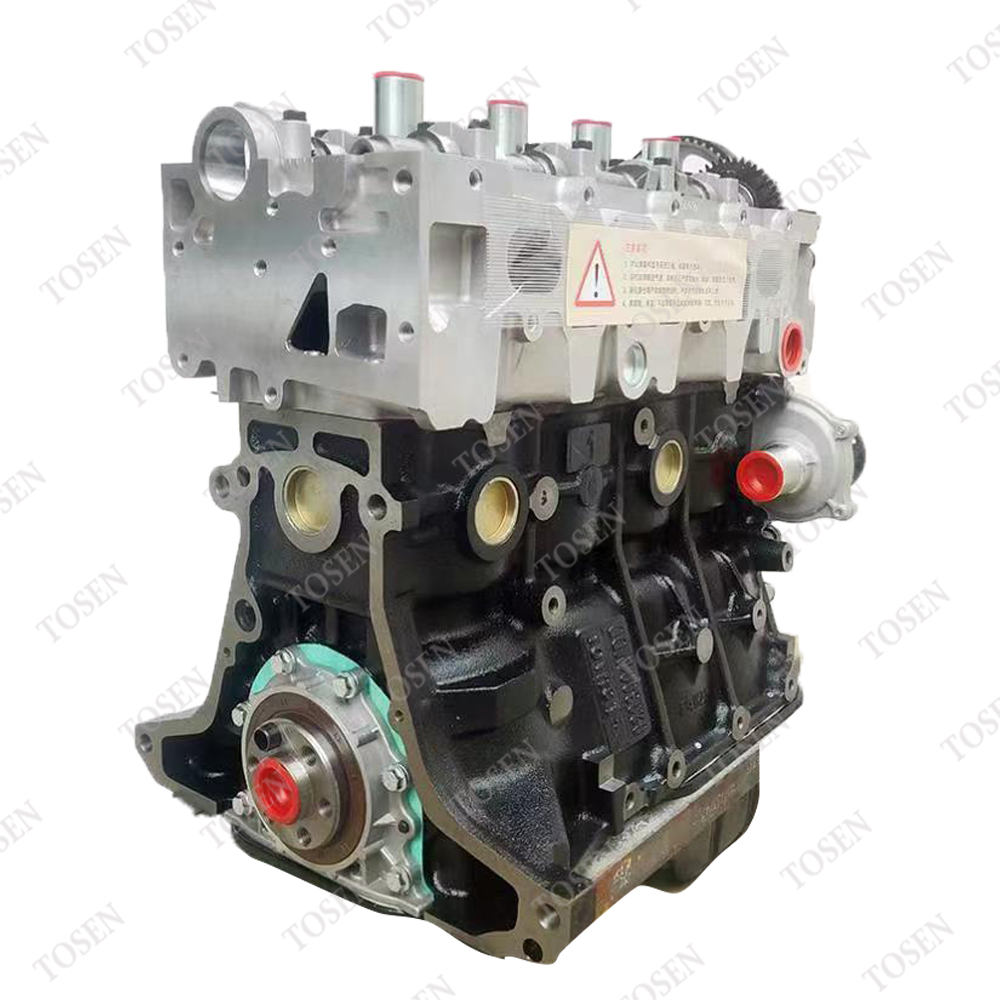
Turnkey solutions provide massive commercial and logistical advantages. The target audience shifts drastically here. Daily drivers need reliable transportation immediately. B2B commercial fleets cannot afford idle trucks. Independent repair shops prefer high-turnover repairs to maximize bay space. A fully dressed motor serves these groups perfectly. It prioritizes speed and guaranteed reliability over customization.
Plug-and-play standardization eliminates assembly headaches. The motor arrives pre-tested from the manufacturer. It boasts consistent factory quality control. Mechanics do not waste hours searching for missing brackets. They do not fight incompatible sensors. Everything integrates seamlessly. You avoid the tedious parts-matching process entirely. The shop simply unbolts the old unit and drops in the new one.
Minimizing downtime remains crucial for businesses. This approach drastically reduces bay time in the shop. Commercial vehicles generate revenue. Every day a delivery truck sits on a lift, the company loses money. Returning the asset to revenue-generating status faster often offsets the higher purchase price. Fleet managers understand this math perfectly. Time saved equals money earned.
Warranty and liability protection further solidify this choice. Manufacturers generally offer comprehensive warranties on complete assemblies. They control the entire build environment. They dictate the torque specs, the sealants, and the break-in lubricants. This closed ecosystem reduces the buyer's liability. If a component fails, the manufacturer covers it. The mechanic does not shoulder the blame for a faulty peripheral part.
You must dismantle the "cheaper part saves money" myth. A hard-skills financial breakdown reveals a different reality. The cost of component transfer shocks many buyers. Moving an alternator, turbocharger, belts, and sensors takes immense effort. Transferring these parts to a stripped block adds 10 to 20 hours of professional shop labor. Shop rates quickly devour any initial savings.
Hidden machining costs complicate the budget further. Reusing old cylinder heads on a new foundational casting usually requires professional machine work. Technicians must perform decking to ensure a flat mating surface. They must conduct pressure testing for microscopic cracks. They often perform valve jobs to prevent immediate failure. These outsourced machine shop bills escalate rapidly.
The "usable parts" fallacy traps many DIY mechanics. They assume old accessories will survive the swap. This rarely happens smoothly. Components like water pumps or fuel injectors often fail shortly after the rebuild. The stress of removal and reinstallation pushes aged parts past their limit. This incurs secondary teardown costs. You end up paying for labor twice.
Our conclusion on cost emphasizes predictability. Complete motors feature a high capital expenditure but guarantee a predictable, lower labor cost. Stripped units feature a low initial price tag. However, they carry highly volatile labor and machining expenses. You must calculate the entire lifecycle expense before ordering parts. An honest assessment of shop rates dictates the true winner.
Bottom-of-funnel buyers need a structured decision matrix. You can use the following four-point framework to evaluate your specific scenario. Do not skip any steps. Honest answers here prevent catastrophic budget overruns later.
State of Existing Components: Inspect your current accessories. Are your fuel systems and cylinder heads pristine? Did your old motor suffer catastrophic metal circulation? If your parts remain undamaged, a stripped block works. If the old unit spread metal shavings everywhere, you need a complete assembly.
Project Timeline & Downtime Limits: Determine your urgency. Do you need the vehicle running by Monday morning for your commute? If so, buy a fully dressed motor. Is this a winter garage project? If you have six months to tinker, a bare block offers a rewarding challenge.
Shop Resources and Mechanical Expertise: Assess your tool chest honestly. Do you have access to an engine hoist? Do you own precision measuring tools like micrometers and dial indicators? Can you handle ECU tuning capabilities? Lacking these resources makes assembling a stripped block nearly impossible.
Primary Goal: Define the objective clearly. Is your goal factory-level reliability for a commuter car? A turnkey assembly guarantees this. Are you pushing extreme horsepower thresholds on a race track? A custom build demands a stripped foundation.
Buyers often make critical mistakes during procurement. You must navigate these traps carefully. Expectation management prevents buyer's remorse. We have compiled the most frequent errors observed in commercial repair bays. Avoid these pitfalls to protect your investment.
The "Plug-and-Play" Myth: No motor is truly effortless. Even a complete, fully dressed unit requires proper break-in procedures. You must perform specific fluid priming rituals before turning the key. Often, you need a professional ECU tune to mate the new hardware properly with the existing chassis electronics.
Mismatched Engine Codes: Buyers often fail to verify exact VIN-matching codes. Two motors might look identical externally but feature different internal reluctor rings. This leads to severe sensor incompatibility. You might also face transmission mating issues. Always cross-reference the VIN before clicking buy.
Ignoring the Root Cause: Never drop a brand-new complete motor into a chassis without diagnosing the original failure. Did the old unit overheat due to a clogged radiator? Reusing a contaminated oil cooler will destroy the new motor instantly. You must fix the peripheral systems first.
Your final verdict depends heavily on your mechanical context. A car bare engine remains a tactical choice. It serves specialized builds and requires expert hands. It allows unparalleled customization for horsepower enthusiasts. Conversely, a complete assembly represents a strategic investment. It guarantees reliability and enables rapid deployment for fleets and daily drivers.
You must take immediate, action-oriented next steps. First, audit your current usable parts meticulously. Identify any contaminated systems. Next, consult your local mechanic regarding hourly labor rates. Finally, request a detailed quote for both options. Base this quote on your specific VIN and your ultimate project goals. Informed decisions eliminate nasty financial surprises.
A: No. It is strictly the cast metal housing. It contains no moving parts. A short block includes the rotating assembly, which features the crankshaft, connecting rods, and pistons. Always verify exactly which tier you are purchasing to avoid missing crucial internal components.
A: Yes, you typically reuse your factory ECU. However, you must ensure the new motor matches the original VIN code perfectly. Even slight variations require professional re-flashing or tuning. Failing to update the ECU software can cause poor idling, sensor faults, or catastrophic detonation.
A: Yes. Manufacturers assume less risk with complete assemblies because they control the final build quality. Therefore, complete units carry longer, broader warranties. Stripped blocks carry stricter installation clauses. Manufacturers often require documented proof of professional machine work and assembly before honoring claims.
