+86-13735376777 tosenauto@gmail.com


Transmission failures present massive operational challenges for any vehicle owner or fleet manager. A single breakdown halts vehicle movement immediately. This forces operators to face expensive downtime and steep labor rates. The core decision you make next dictates everything. Choosing the right replacement strategy determines if your repair holds up. Are you sourcing individual components, buying tiered rebuild kits, or installing a complete remanufactured unit? Making the wrong choice turns a permanent fix into a temporary band-aid.
Evaluating these options requires looking far beyond initial price tags. You must properly assess engineering synergy and internal load requirements. Ignoring these factors increases the risk of cascading failures caused by inferior components. In this guide, you will learn exactly how to match the repair scope to the right components. We will explore kit tiers, highlight critical components you should never reuse, and provide a clear framework for long-term reliability.
Scope Dictates Sourcing: Assess internal damage first; minor seal leaks require different kits than catastrophic planetary gear failures with metal debris.
Understand Kit Tiers: Rebuild kits range from basic Overhaul (seals/gaskets) to Deluxe (includes transmission bands, filters, and friction plates) to match the exact repair depth.
Beware the "Spot Repair" Trap: Replacing a single broken component without upgrading interconnected wear items often leads to cascading failures.
Match Parts to Application: Sizing and material selection must account for load types, service factors, and thermal capacity, especially for truck transmission parts.
Before ordering any replacement items, you must define the baseline condition of the system. Many drivers misdiagnose external issues as catastrophic internal failures. A failing speed sensor can easily force a vehicle into limp mode. Worn engine mounts often replicate the harsh clunking of a slipping gear. You must eliminate these external variables first. Confirm genuine internal damage before tearing down the casing.
Once you confirm internal failure, you face a critical decision. Do you execute a targeted fix or overhaul the entire unit? Spot repairs often seem tempting. However, this approach carries massive risks due to the cascading effect. Replacing a single broken gear seems cost-effective initially. Yet, you leave neighboring stressed components untouched. These older parts endure immense strain during the initial failure. They will eventually fail under new operating pressures. This oversight leads to repeated labor costs and severe secondary failures.
To avoid this trap, categorize your damage into two component groups:
Soft Parts: These include items like rubber seals, paper gaskets, O-rings, and clutch friction plates. Over time, heat degrades these materials. Fixing leaks or mild slipping usually involves standard gearbox parts designed for basic resealing.
Hard Parts: These encompass robust metal components. Planetary gear sets, pump housings, and main shafts fall here. Damage to hard parts creates metallic debris. Finding metal shavings in your fluid pan dictates a comprehensive master rebuild or a fully remanufactured unit replacement.
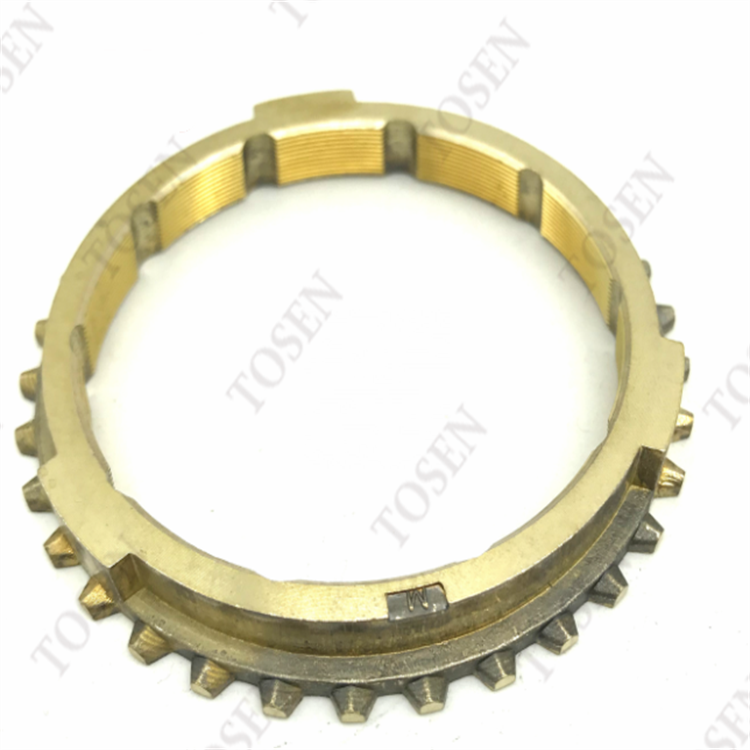
Selecting the right transmission spare parts determines the success of your rebuild. Buyers frequently overspend on unnecessary upgrades or under-purchase vital consumables. The automotive industry organizes rebuild kits into standardized tiers. Understanding this decision framework prevents costly mid-repair work stoppages.
Overhaul kits provide the bare minimum for transmission service. They contain basic soft parts, seals, and gaskets. Technicians rely on these kits strictly for external leak repairs. They work perfectly for correcting surface-level pressure drops. You should only choose an overhaul kit when internal hard parts remain completely pristine.
Banner kits step up the coverage by adding essential internal components. They include everything from the overhaul tier alongside basic internal friction and wear items. These kits address standard mileage-based wear. If your vehicle experiences mild slipping without catastrophic gear failure, a banner kit offers a solid middle ground.
Master kits represent the industry standard for a reliable in-house rebuild. They include all banner components plus vital steel plates. You also receive additional high-wear internal parts. Shops utilize master kits for vehicles executing a long-term retention strategy. They restore the shifting clutch packs entirely.
Deluxe kits provide ultimate peace of mind. They bundle master kit components with crucial extras like fluid filters, transmission bands, and specialized bushings or washers. Choose a deluxe tier for complete system reconstruction. Having every possible consumable on hand eliminates frustrating delays on the workbench.
Kit Tier | Included Components | Best Application Scenario |
|---|---|---|
Overhaul Kit | Seals, gaskets, O-rings. | Fixing external fluid leaks; hard parts are intact. |
Banner Kit | Overhaul items + friction plates. | Standard high-mileage wear; mild slipping issues. |
Master Kit | Banner items + steel plates + high-wear parts. | Standard full rebuild for long-term vehicle retention. |
Deluxe Kit | Master items + filters + bands + bushings. | Complete reconstruction to prevent any mid-repair delays. |
Certain components demand uncompromising quality. Reusing heavily stressed elements ruins an otherwise perfect rebuild. Mechanics must inspect these critical zones meticulously before reassembly.
Torque converters sit at the top of the non-reusable list following an internal failure. The torque converter acts as a fluid coupling device. When internal hard parts shatter, they release microscopic metal shavings into the fluid stream. These metallic fragments lodge deep inside the torque converter housing. Flushing the unit never removes all the debris. Reusing a contaminated converter pumps abrasive metal directly back into your fresh repair. This fatal error destroys a newly rebuilt transmission in miles.
Next, you must evaluate torque distribution centers. Your synchronizer hub dictates shifting smoothness in manual configurations. For automatic setups, planetary gears perform this role. Worn teeth or scoring along these surfaces compromise power delivery. You might experience gear pop-outs or harsh engagements. Damage here mandates strictly OEM-spec or heavily upgraded aftermarket replacements.
Finally, respect the hydraulic control center. Valve bodies and solenoids manage fluid pressure to execute gear changes. Minor pressure variances cause massive shifting anomalies. Always source control units verified through rigorous flow-testing in controlled environments. Cheap, untested solenoids will trigger check engine lights and force the system back into limp mode.
The origin of your parts heavily influences long-term success. Navigating the parts market requires balancing budget constraints against reliability expectations. Follow these sourcing guidelines to protect your investment.
Used/Salvage Parts (High Risk): Buying salvage yard units introduces a false economy. You inherit unknown maintenance histories and invisible internal wear. Salvage yards typically offer very short warranties, sometimes only 30 days. You should only consider this route for vehicles nearing the absolute end of their lifecycle.
Aftermarket Parts (Variable Quality): The aftermarket sector offers a vast quality spectrum. Sourcing gearbox repair parts from premium aftermarket brands sometimes yields better results than original equipment. Top-tier manufacturers frequently redesign components to correct original factory flaws. However, substandard white-label parts will fail prematurely. Thorough supplier vetting is mandatory.
OEM Parts (High Cost, Exact Fit): Original Equipment Manufacturer components provide the ultimate engineering synergy. They ensure new elements perfectly match factory tolerances. You pay a premium for OEM sourcing, but you guarantee precise fitment and reliable performance.
Remanufactured Units (The Comprehensive Alternative): Factory-remanufactured transmissions offer an excellent alternative to piecemeal rebuilding. Technicians assemble these units in standardized, climate-controlled environments. Facilities test them on dynamometers to simulate real-world driving. Better yet, remanufactured units often include technical updates to fix known OEM vulnerabilities. They also carry robust, nationwide warranties covering both parts and labor.
Commercial vehicles and heavy haulers operate in an entirely different universe than passenger cars. Evaluating standard sedans requires basic metrics. Commercial trucks demand a much stricter set of criteria. Sizing truck transmission parts demands strict attention to service factors, environmental stress, and massive torque spikes.
You must factor in the Service Factor (SF). Standard passenger cars handle relatively uniform loads. Commercial trucks face non-uniform loads, continuous operation, and extreme inclines. You need to calculate safety margins explicitly for these conditions. An undersized gear set will shear under the strain of a fully loaded trailer.
Thermal capacity represents another major hurdle. Heavy towing exponentially increases internal hydraulic pressure. This pressure generates intense heat. High temperatures degrade standard friction materials and harden rubber seals quickly. To combat this, builders must implement specific upgrades:
Install fluid-compatible seals designed for extreme heat resistance.
Upgrade to heavy-duty friction plates constructed from carbon or Kevlar compounds.
Integrate larger auxiliary fluid coolers to dissipate heat efficiently.
Finally, commercial gearboxes must survive immense shock loads. Sudden torque spikes happen frequently. Drivers encounter uneven terrain, sudden payload shifts, or abrupt traction changes. Standard aluminum housings flex under these conditions, causing gear misalignment. Heavy-duty applications require reinforced cast-iron housings and oversized output shafts to withstand these brutal forces without snapping.
Rebuilding a transmission requires an immense amount of labor, specialized tools, and technical craftsmanship. Because the labor investment is so high, underinvesting in the initial replacement components yields a terrible return on investment. Cutting corners on parts practically guarantees a second teardown in the near future.
You must align your purchasing strategy directly with your vehicle retention plan. If you plan to sell the vehicle in six months, a basic repair might suffice. However, if you intend to keep the vehicle for five years or longer, invest wisely. Purchase a Master or Deluxe kit for in-house repairs. Alternatively, install a fully remanufactured unit. Always prioritize suppliers who stand behind their engineering with transparent, nationwide warranties. Doing it right the first time remains the most cost-effective strategy.
A: Rebuilding typically offers lower upfront parts costs but heavily depends on expensive local labor and technician craftsmanship. Replacing it entirely with a remanufactured unit presents higher initial costs but slashes shop labor time. Replacements also usually feature broader, nationwide warranties, making them safer for long-term investments.
A: An overhaul kit only contains soft parts like seals, gaskets, and O-rings. It solely fixes external leaks. A master kit includes all overhaul items plus internal steel plates and friction clutches. You need a master kit to fix slipping gears and restore internal shifting mechanisms.
A: Never reuse old fluid. When internal components fail, they shed microscopic metal shavings. These metal fragments remain suspended in the old fluid. Pumping contaminated fluid into a freshly rebuilt system introduces abrasive material that will immediately destroy the newly installed components.
A: You do not always need to replace it, but you must inspect it thoroughly. Check for worn engagement teeth or deep scoring. If your vehicle experiences gear grinding or frequently pops out of gear while driving, the hub and sliding sleeves likely require immediate replacement.
