+86-13735376777 tosenauto@gmail.com


The manual gearbox relies heavily on a small yet vital component to prevent catastrophic gear clash. This precise part directly dictates the operational lifespan of the entire transmission system. It also governs the tactile shift quality you feel from the driver's seat. For technical operators, mechanics, and procurement specialists, diagnosing transmission faults accurately remains a daily necessity. Evaluating replacement components correctly often means the difference between a durable fix and a catastrophic secondary failure. We will explore how understanding internal mechanics drives much smarter repair strategies. Recognizing material properties and early failure symptoms empowers you to make cost-effective purchasing decisions. You will learn the specific mechanical principles governing gear speed matching. We will cover how distinct lubrication choices heavily impact long-term wear and tear. Finally, we will detail actionable diagnostic workflows and reliable procurement logic to keep your drivetrains shifting perfectly.
Primary Function: Synchronizer rings act as friction brakes, equalizing the rotational speed of the gear and the output shaft before engagement.
Material Sensitivity: Brass components require specific lubrication (GL-4); improper gear oil (GL-5) can accelerate chemical wear.
Failure Indicators: Grinding gears, high shifting resistance, and slipping out of gear are primary diagnostic flags.
Procurement Logic: Replacing a manual transmission synchro ring is a labor-intensive process; evaluating OEM vs. high-grade aftermarket parts is crucial to avoiding repeat teardowns.
When you operate a vehicle, shifting gears introduces a complex physical challenge. You face a distinct speed differential between the input shaft and the output shaft. The input shaft connects to the engine through the clutch assembly. It spins at the engine's current revolutions. The output shaft connects directly to the drive wheels. It spins at the current road speed. Engaging these two rotating masses directly causes violent grinding. The components must reach the exact same rotational speed before they can safely mesh.
The gearbox synchronizer ring elegantly solves this fundamental mechanical problem. It functions as a miniature, highly effective friction brake inside the transmission. The ring features a carefully machined internal friction surface. This surface physically clamps down onto the tapered cone of the target gear. You can visualize this process easily. Imagine trying to match the speed of a spinning vinyl record. You gently press your open hand against the center label. As you apply more physical pressure, the surface friction increases. Eventually, your hand and the record spin at the exact same rate.
This precise braking action happens in a fraction of a second. The entire engagement sequence follows a strict physical pathway. Every internal component must move in perfect mechanical harmony.
The driver initiates the shift by moving the cabin selector lever.
The internal shift fork pushes the synchronizer sleeve forward.
The moving sleeve presses firmly against the outer edge of the synchronizer ring.
The ring grabs the gear cone tightly, rapidly aligning the rotational speeds.
The baulk ring mechanism physically prevents the sleeve from moving further until speeds equalize fully.
Once speeds match perfectly, the sleeve slides cleanly over the engagement teeth.
This sequential movement guarantees a smooth, seamless transfer of engine power. It actively protects the fragile engagement teeth from destructive shearing forces.
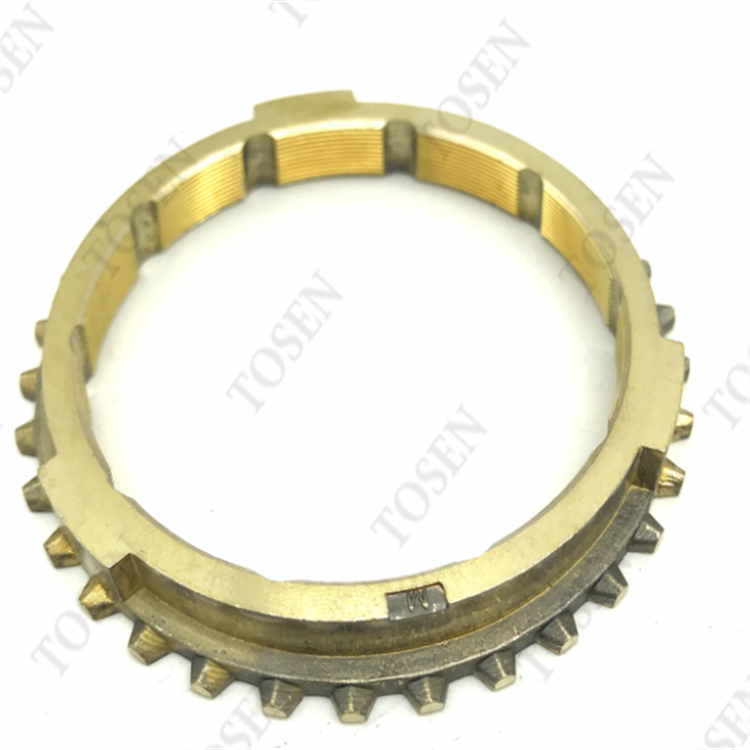
Transmission engineers select specific materials based on intended thermal loads and friction requirements. Different driving environments demand entirely different alloy compositions. Understanding these foundational materials helps mechanics predict wear patterns accurately. It also helps technicians specify the correct fluids for maintenance.
Brass and bronze alloys remain the absolute standard for everyday passenger vehicles. They conduct heat exceptionally well. This rapid heat dissipation prevents the friction surfaces from warping under normal loads. However, yellow metals remain highly susceptible to specific chemical attacks. Performance vehicles and heavy-duty commercial trucks require tougher engineering solutions. Manufacturers often use advanced carbon fiber or molybdenum linings for these extreme applications. These modern linings significantly increase the overall friction coefficient. They also offer superior durability under constant high-rpm shifting.
Material Type | Primary Application | Heat Dissipation | Wear Resistance |
|---|---|---|---|
Brass / Bronze Alloy | Daily driving, light passenger vehicles | Excellent | Moderate |
Carbon Fiber Composite | Track use, high-performance sports cars | Good | Very High |
Molybdenum Lining | Heavy-duty fleets, commercial trucks | High | Extreme |
This specific material science brings us to a crucial maintenance conflict. The ongoing debate between GL-4 and GL-5 gear oils confuses many technicians. You must understand the harsh chemical reality behind these specifications. Many modern GL-5 fluids contain heavy sulfur-phosphorus extreme-pressure (EP) additives. These specific additives protect hypoid gears in heavy rear differentials. However, under high operational temperatures, these chemicals become highly corrosive. They aggressively attack "yellow metals" like brass and bronze.
The sulfur physically bonds to the brass surface as the gearbox heats up. When the ring shifts against the cone, it violently strips away the bonded layer. This micro-spalling process quickly ruins the critical friction surface. Selecting the wrong lubricant during routine maintenance directly causes premature failure. Always verify the manufacturer's precise fluid specification before filling the case. Using a GL-5 fluid in a gearbox explicitly demanding GL-4 will destroy the internal components.
Identifying a failing synchronizer ring requires careful attention to tactile and auditory feedback. Early diagnosis prevents catastrophic damage to the surrounding expensive gearsets. Mechanics typically divide diagnostic flags into two distinct categories. First, they monitor Noise, Vibration, and Harshness (NVH) symptoms. Second, they perform rigorous physical inspections immediately after teardown.
You should carefully watch out for specific NVH symptoms during diagnostic test drives:
Grinding on upshifts or downshifts: This classic symptom usually points to heavily worn internal friction grooves. It can also indicate rounded blocker teeth struggling to securely engage the gear.
Frequent Gear Pop-out: A transmission aggressively dropping out of gear signals severe internal trouble. This often surfaces as a secondary symptom. It implies worn synchro hub assemblies and heavily degraded engagement teeth.
Stiff or Blocked Shifting: You might encounter a solid wall of resistance when moving the lever. This happens when a ring collapses internally. Incorrect operational tolerances also prevent the sleeve from passing smoothly over the hub.
Once you pull the transmission and split the casing, physical inspection begins. Mechanics must measure the precise clearance between the ring and the gear cone. You perform this test using highly accurate feeler gauges. If the gap falls below the factory minimum specification, the component is useless. It will bottom out on the cone without generating any friction.
Visual cues also reveal the true history of the gearbox. Inspect the metal closely for surface glazing. A mirror-like finish on the inside indicates severe overheating and total loss of friction material. Look closely for dark bluing marks. Blue discoloration points directly to extreme thermal stress. Finally, search for microscopic hairline physical cracking. Any crack demands immediate replacement of the unit.
Procurement specialists face a unique dilemma when buying internal gearbox components. The actual physical part cost remains extremely low. Conversely, the labor cost to drop, clean, and split a transmission is massive. Therefore, component reliability takes absolute priority. You must evaluate your replacement tiers carefully.
Original Equipment Manufacturer (OEM) parts offer a guaranteed baseline of quality. They provide exact fitment and proven factory durability. Choosing OEM reduces the risk of incorrect tolerances out of the box. Performance aftermarket parts cater to entirely different needs. They often feature upgraded friction linings like carbon or kevlar. Fleet operators and track enthusiasts rely heavily on these robust aftermarket options to survive continuous heavy abuse.
Model-specific variations heavily complicate the parts sourcing process. Ring dimensions, taper angles, and tooth counts are highly proprietary. Minor millimeter variations will result in immediate mechanical failure. For example, sourcing a precise Fiat Palio synchronizer requires absolute accuracy. You must match the exact gearbox code, such as the C514. A ring from a visually similar C513 gearbox will not function correctly under load.
We strongly advise adopting a comprehensive kitting strategy. Purchasing isolated rings introduces significant mechanical risk. The old sleeve and hub have already worn into the distinct shape of the old ring. We recommend buying complete synchronizer assemblies instead. This includes the ring, internal springs, shift keys, and the outer sleeve. Installing a fresh, matched set ensures uniform wear surfaces. When acquiring reliable transmission spare parts, prioritizing full kits always minimizes the chance of a frustrating comeback.
Rebuilding a gearbox involves significant implementation risks. Professional mechanics strictly follow the "While You're In There" rule. If one synchronizer completely fails, the others likely share similar wear levels. The second and third gear units usually fail first due to heavy city traffic use. Replacing the entire set at once reduces your long-term labor liabilities. It prevents you from pulling the heavy transmission a second time next year.
You cannot execute this precise repair with simple garage equipment. Successful rebuilding requires specialized, heavy-duty tooling. You need high-capacity hydraulic presses to safely remove stubborn gear clusters. Precise bearing pullers prevent accidental damage to the delicate main shaft. You must also adhere to strict torque specifications during reassembly. Guessing torque values leads directly to premature bearing failure. Installing a fresh manual transmission synchro ring demands extreme patience and accuracy.
Do not ignore the critical break-in period. Newly installed brass rings require a proper mechanical break-in phase. They will naturally shed small microscopic metal particles during the first few hundred miles. This shedding is completely normal as the friction surfaces mate together. We strongly advise completing a comprehensive fluid flush shortly after the rebuild. Draining the initial break-in oil clears the shedding particles away safely. Refilling the case with fresh fluid protects your new components for years to come.
The synchronizer ring truly acts as the defining factor in transmission longevity. It dictates the crisp shift feel that drivers expect daily. By functioning as a precise friction brake, it protects vulnerable gear teeth from violent impacts. Understanding material compatibility dictates the operational lifespan of these crucial parts. Selecting the proper GL-4 or GL-5 lubrication actively prevents rapid chemical degradation.
Before committing to a full gearbox teardown, take calculated next steps. Always cross-reference your specific vehicle manual for strict gear oil requirements. Consult detailed diagnostic flowcharts to rule out simpler clutch hydraulic issues first. When you do proceed with a rebuild, invest in high-quality kits rather than isolated replacement parts. Proper diagnosis and smart procurement ensure your drivetrain runs flawlessly for miles ahead.
A: Yes, but you face severe mechanical risks. Ignoring a failing ring rapidly destroys the gear engagement dogs. It also contaminates your transmission oil with highly abrasive metal shavings. If you must drive the vehicle to a shop, double-clutching serves as a temporary emergency workaround. This specific driving technique helps you match rotational speeds manually and minimizes further grinding.
A: The total bill reveals a massive disparity between parts and labor. The physical ring itself remains relatively cheap. However, the labor required to drop the transmission, split the casing, and rebuild the main shaft is incredibly high. Expect the intensive labor charges to represent the vast majority of your final repair invoice.
A: Poor driving habits accelerate wear significantly. Resting your hand on the shifter constantly applies destructive pressure to the internal forks. Aggressive shifting before the friction ring fully bites down strips away the brass material. Furthermore, an incorrectly adjusted clutch pedal forces the ring to fight the engine's residual torque during every shift.
A: No. Pouring fresh fluid can sometimes improve the overall shift feel temporarily. It provides superior lubrication and successfully flushes out old, abrasive contaminants. However, liquid oil cannot replace physically worn away friction material. It also cannot restore rounded engagement teeth. A mechanically damaged ring always requires physical replacement.
