+86-13735376777 tosenauto@gmail.com


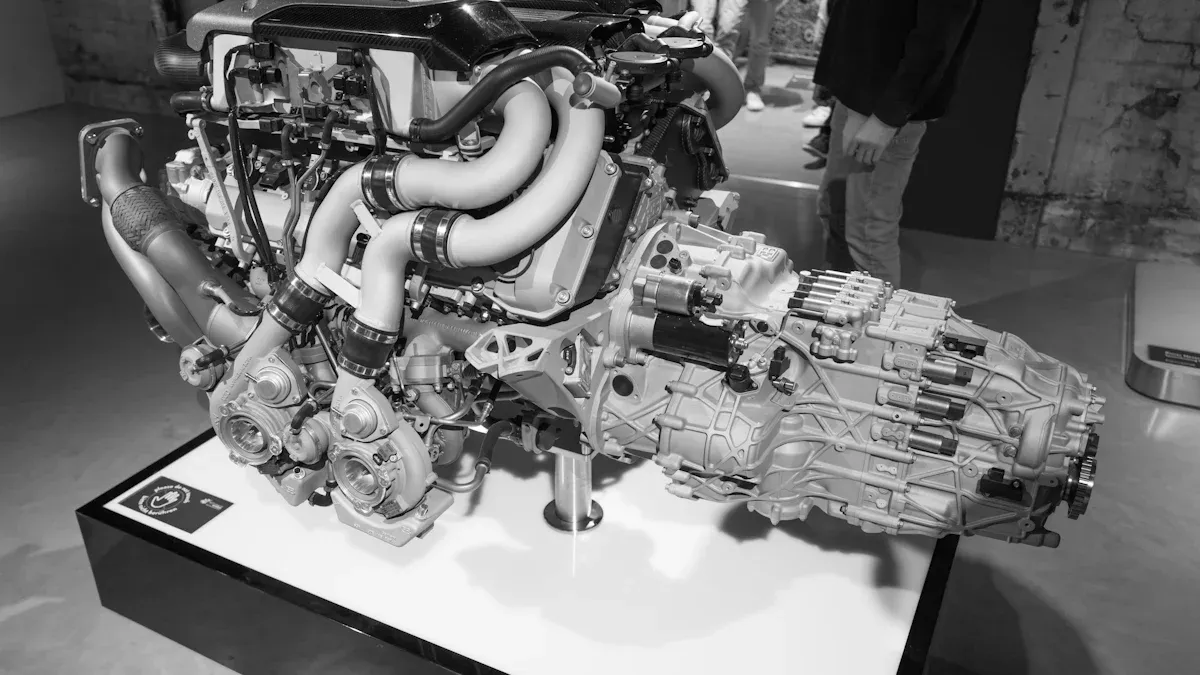
You might wonder how much Car Engines actually weigh. Most engines fall between 200 and 900 pounds, depending on their type and the vehicle you drive. For example, small car engines often weigh around 200 to 300 pounds, while diesel and V8 engines can reach up to 700 pounds. Compact cars use lighter engines, sometimes as little as 145 pounds, but sports cars and trucks need heavier engines for power and durability. Engine weight matters because it affects your car’s performance, fuel efficiency, and handling.
Car engines typically weigh between 200 and 900 pounds, depending on the type and vehicle.
Lighter engines improve fuel efficiency and handling, while heavier engines provide more power and durability.
Compact cars usually have engines weighing 145 to 400 pounds, making them efficient and easy to drive.
SUVs and trucks require heavier engines, often between 400 and 700 pounds, for better towing and off-road capabilities.
Electric vehicle motors are lighter, weighing 100 to 300 pounds, but their batteries add significant weight to the overall vehicle.
Engine weight affects acceleration; lighter engines allow for quicker speed and better handling.
Choosing a lighter engine can lead to lower fuel costs and a smaller carbon footprint.
Consider your driving needs when selecting an engine; heavier engines may offer durability for towing, while lighter engines suit daily commuting.
When you look at Car Engines, you will notice that their weights can vary a lot. The weight depends on the type of engine and the materials used. Most 4-cylinder engines weigh between 200 and 350 pounds. If you choose a V6 engine, you can expect it to weigh from 300 to 450 pounds. V8 engines are heavier, usually ranging from 400 to 700 pounds. Diesel engines often match V8 engines in weight, falling between 400 and 700 pounds. Electric engines are lighter, with most weighing between 100 and 300 pounds.
Tip: Lighter engines can improve fuel efficiency and handling, while heavier engines often provide more power and durability.
You might wonder why these ranges matter. The weight of your engine affects how your car accelerates, handles, and uses fuel. If you want a car that feels light and nimble, you should look for a smaller engine. If you need more towing power or speed, a heavier engine might suit you better.
Here is a table that shows the average weight ranges for common engine types. You can use this table to compare different Car Engines quickly.
| Engine Type | Weight Range (lbs) | Weight Range (kg) |
|---|---|---|
| 4-cylinder | 200 - 350 | 90 - 160 |
| V6 | 300 - 450 | 140 - 200 |
| V8 | 400 - 700 | 180 - 320 |
| Diesel | 400 - 700 | 180 - 320 |
| Electric | 100 - 300 | 45 - 136 |
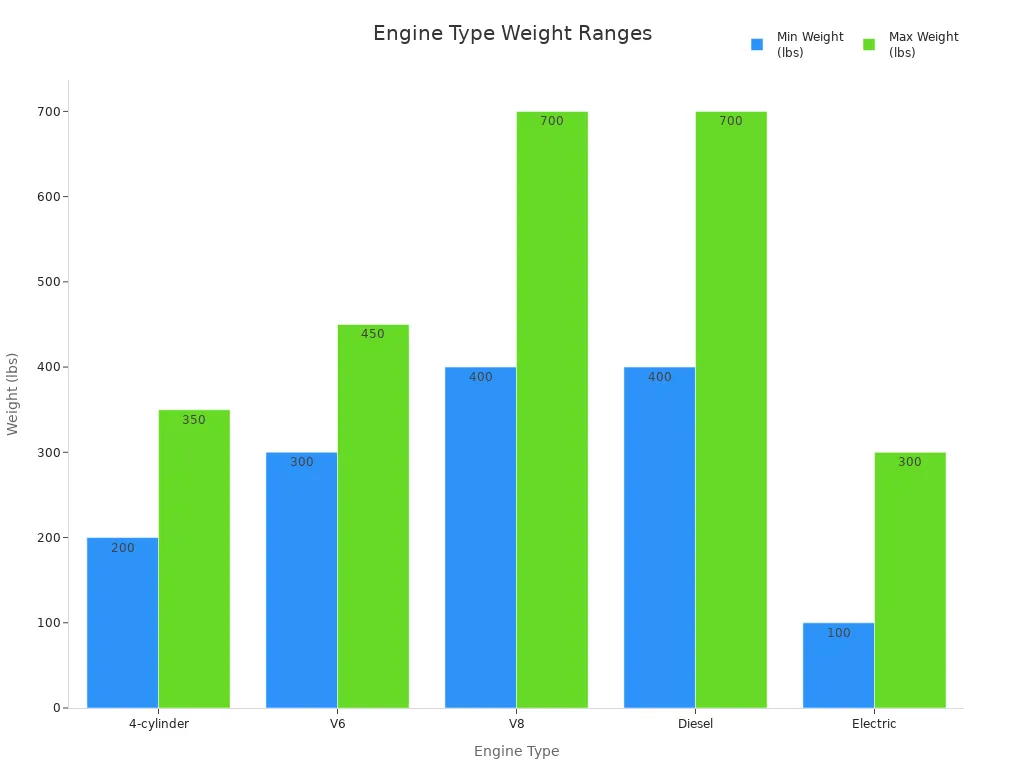
If you compare these numbers, you will see that electric engines are the lightest. Diesel and V8 engines are the heaviest. The chart above gives you a visual way to see these differences. When you shop for a car or plan a modification, knowing these weight ranges helps you make a smarter choice.

When you look at compact cars, you will notice that they use some of the lightest engines on the market. These vehicles focus on efficiency and easy handling. Most compact cars come with either a 3-cylinder or an inline 4-cylinder engine. You can expect these engines to weigh between 145 and 400 pounds. This lighter weight helps compact cars save fuel and makes them easier to drive in city traffic.
Most compact car engines weigh 145–400 pounds.
Common engine types: 3-cylinder and inline 4-cylinder.
If you want a car that is easy to park and quick to respond, a compact car might be the right choice. The lighter engine also means less strain on the suspension and brakes. You will find that maintenance costs often stay lower because of the simple design.
Tip: Compact cars with lighter engines often give you better gas mileage and lower repair bills.
Sedans offer a balance between comfort and performance. These vehicles usually have more space and features than compact cars. Most sedans use 4-cylinder or V6 engines. The engine weight in sedans usually falls between 250 and 450 pounds. This extra weight gives you a smoother ride and more power for highway driving.
You might notice that sedans feel more stable at higher speeds. The engine weight helps keep the car planted on the road. If you often drive with family or carry extra cargo, a sedan’s engine can handle the load without losing efficiency.
Typical sedan engine weight: 250–450 pounds.
Engine types: 4-cylinder and V6.
Sedans give you a good mix of fuel efficiency and power. You get enough strength for daily driving and long trips.
SUVs stand out for their size and strength. These vehicles need engines that can move more weight and handle tough roads. Most SUVs use V6 or V8 engines, which are heavier than those in compact cars or sedans. The average engine weight for SUVs ranges from 400 to 700 pounds.
Most SUVs weigh between 2.0 and 2.5 tonnes.
Newer SUVs can reach 2.6–2.7 tonnes.
Larger electric SUVs may reach 3.0 tonnes by 2025.
You will notice that SUVs feel powerful and steady, even when carrying passengers or towing a trailer. The heavier engine helps with off-road driving and gives you confidence in rough weather. If you need a vehicle for family trips or outdoor adventures, an SUV’s engine weight supports your needs.
Note: Heavier engines in SUVs can lower fuel efficiency, but they give you more power and towing ability.
You see trucks on highways and job sites every day. These vehicles need strong engines to carry heavy loads and handle tough work. Truck engines weigh more than those in most passenger vehicles. Light-duty trucks use engines that weigh between 400 and 700 pounds. Heavy-duty trucks need even bigger engines, sometimes reaching 1,000 pounds or more.
Trucks fall into different classes based on their Gross Vehicle Weight Rating (GVWR). This rating tells you how much weight a truck can carry, including its own weight and cargo. Here is a simple table to help you understand truck classes:
| Vehicle Class | Gross Vehicle Weight Rating (GVWR) |
|---|---|
| Light Duty | Less than 8,500 lbs |
| Heavy Duty | 8,501 lbs and above |
If you drive a light-duty truck, you get a balance of power and fuel efficiency. Heavy-duty trucks focus on strength and durability. Their engines use more metal and larger parts, which adds to the weight. You need a heavier engine for towing trailers, hauling equipment, or working in construction.
Tip: When you choose a truck, think about your needs. A heavier engine gives you more power, but it can use more fuel.
Sports cars stand out for speed and performance. You find engines in sports cars that weigh between 300 and 600 pounds. These engines use advanced technology to produce high horsepower without adding too much weight. Many sports cars use V6 or V8 engines, but some high-end models use turbocharged 4-cylinder engines.
Engineers design sports car engines to be light and powerful. They use aluminum and other lightweight materials. This helps the car accelerate quickly and handle sharp turns. You feel the difference when you drive a sports car. The engine weight supports fast acceleration and precise control.
Typical sports car engine weight: 300–600 pounds.
Common engine types: V6, V8, turbocharged 4-cylinder.
If you want a car that feels fast and agile, look for a sports car with a lighter engine. You get better handling and a thrilling driving experience.
Electric vehicles (EVs) use a different kind of engine. Most EV motors weigh between 100 and 300 pounds. You notice that the motor itself is lighter than a traditional engine. However, EVs often weigh more overall because of their large battery packs.
Recent studies show that electric vehicles are heavier than cars with internal combustion engines. This extra weight comes from the batteries, not the motor. The increased weight can affect energy use and how roads wear down over time. Even though EVs are heavier, they do not top the list for the heaviest vehicles on the road.
Note: Electric motors are light, but the total weight of an EV can be high because of the battery.
If you want a quiet ride and lower emissions, an electric vehicle offers a good choice. You get instant torque and smooth acceleration. The lighter motor helps with efficiency, but you should consider the total weight when thinking about performance and handling.
You might see 3-cylinder engines in many compact cars and small SUVs. These engines focus on efficiency and light weight. Most 3-cylinder engines weigh between 140 and 220 pounds. Manufacturers often use aluminum to keep the engine light. You get good fuel economy and easy handling with this engine type.
Weight range: 140–220 pounds
Common vehicles: Compact cars, small SUVs
If you drive in the city or want a car that saves fuel, a 3-cylinder engine can be a smart choice. You will notice less vibration and smoother acceleration in newer models. Engineers design these engines to balance power and efficiency. You may not get high horsepower, but you gain reliability and lower running costs.
Tip: 3-cylinder engines often cost less to maintain because they have fewer moving parts.
You find 4-cylinder engines in many sedans, hatchbacks, and even some sports cars. These engines offer a good mix of power and efficiency. Most 4-cylinder engines weigh between 200 and 350 pounds. You get enough strength for daily driving and highway speeds.
| Engine Type | Weight Range (lbs) | Typical Vehicles |
|---|---|---|
| 4-cylinder | 200–350 | Sedans, hatchbacks, sports cars |
Many manufacturers use lightweight materials like aluminum or magnesium. You benefit from better fuel economy and lower emissions. Some 4-cylinder engines use turbochargers to boost power without adding much weight. You can enjoy quick acceleration and smooth performance.
If you want a reliable engine for commuting or family trips, a 4-cylinder engine fits most needs. You get a balance between cost, power, and efficiency.
Note: Turbocharged 4-cylinder engines can match the power of larger engines while staying light.
You see V6 engines in midsize sedans, SUVs, and trucks. These engines provide more power and smoother performance than 4-cylinder models. Most V6 engines weigh between 300 and 450 pounds. You get strong acceleration and better towing ability.
Weight range: 300–450 pounds
Common vehicles: Midsize sedans, SUVs, trucks
V6 engines use advanced technology to improve fuel efficiency. Some models use direct injection or turbocharging. You notice a quieter ride and less vibration. If you need extra power for highway driving or hauling, a V6 engine gives you confidence.
You may pay more for maintenance and fuel, but you gain durability and strength. Many drivers choose V6 engines for their balance of performance and comfort.
Tip: V6 engines work well for drivers who want more power without moving up to a V8.
Car Engines come in many shapes and sizes. You can choose the type that matches your driving style and needs. Each engine type offers unique benefits for different vehicles.
You see V8 engines in many trucks, SUVs, and high-performance sports cars. These engines stand out for their power and smooth acceleration. Most V8 engines weigh between 400 and 700 pounds. Manufacturers use strong materials like cast iron and aluminum to build these engines. You get more horsepower and torque, which helps with towing and fast driving.
V8 engines often use advanced technology, such as variable valve timing and direct injection. These features improve fuel efficiency and performance. You notice that V8 engines sound different from smaller engines. The deep rumble comes from the way the cylinders fire. If you want a car that feels strong and fast, a V8 engine gives you that experience.
Weight range: 400–700 pounds
Common vehicles: Trucks, SUVs, sports cars
Benefits: High power, strong towing, smooth acceleration
Tip: V8 engines use more fuel than smaller engines, but they offer better performance for heavy-duty tasks and racing.
Diesel engines focus on durability and torque. You find them in trucks, SUVs, and some large sedans. Diesel engines weigh more than gasoline engines because they use heavier parts to handle higher pressure. Most diesel engines weigh between 400 and 1,500 pounds, but some models can be much heavier.
Here is a table showing the weights of popular diesel engines:
| Engine Model | Weight (lbs) |
|---|---|
| Cat 3114 | 1,100 |
| Cat 3116T | 1,500 |
| Cat 3116TA | 1,525 |
| Cat 3126 | 1,295 |
| Cat 3306BT | 2,470 |
| Cat 3406 Power Unit | 4,490 |
| Cummins 6BT | 905 |
| Perkins 704.30 | 442 |
| Volvo TAD-720 | 1,505 |
| Yanmar 4TNV-98 | 568 |
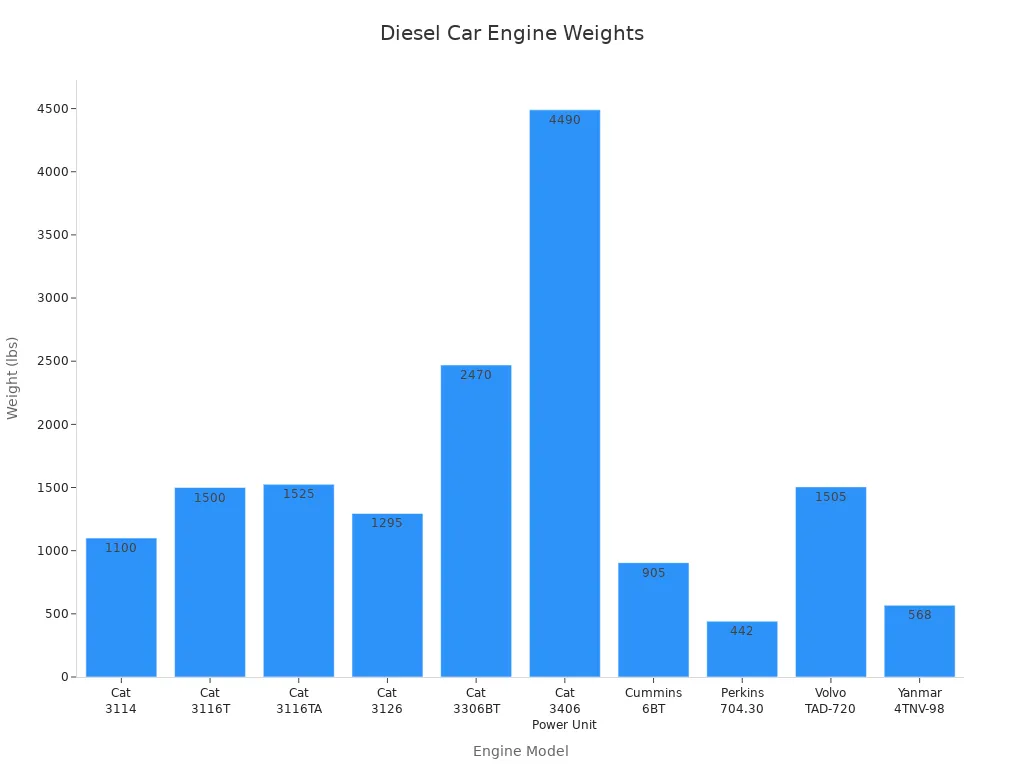
You notice that diesel engines can be much heavier than gasoline engines. The extra weight comes from thicker blocks, stronger pistons, and larger turbochargers. Diesel engines last longer and handle tough jobs, such as towing and hauling. If you need a vehicle for work or travel, a diesel engine gives you reliability and strength.
Note: Heavier diesel engines increase the total weight of your vehicle, which can affect fuel efficiency and handling.
Electric engines use a different design than traditional engines. You find electric motors in modern cars, SUVs, and trucks. Most electric motors weigh between 100 and 300 pounds. The motor itself is light, but the battery pack adds a lot of weight to the vehicle.
Electric cars are heavier than petrol or diesel cars because their batteries can weigh around 450 kilograms. The battery makes up about 25% of the car’s total weight. On average, electric vehicles weigh about 2,000 kilograms, while petrol or diesel cars weigh around 1,600 kilograms.
Electric vehicles are heavier than petrol cars by 300–400 kilograms.
The average weight of an electric car is 2,000 kilograms.
Petrol or diesel cars average 1,600 kilograms.
You get instant torque and smooth acceleration with electric motors. The lighter motor helps with efficiency, but the heavy battery affects handling and energy use. If you want a quiet ride and lower emissions, electric vehicles offer many benefits. You should consider the total weight when thinking about performance and safety.
Tip: Electric motors are light, but the battery pack adds significant weight to the car.
Car Engines come in many types, each with unique features and weight ranges. You can choose the engine that matches your driving needs and lifestyle.
When you look at car engines, size and displacement play a big role in how much they weigh. Displacement means the total volume inside all the cylinders of an engine. Bigger engines with more displacement need larger parts, which adds weight. Research shows that engine weight closely follows displacement volume. If you compare two engines, the one with higher displacement usually weighs more. Engineers also talk about weight density, which is the engine’s weight divided by its displacement. This number helps you see how compact or efficient an engine’s design is. A compact engine with smart design can weigh less, even if it has a similar displacement to a larger, older engine. When you choose a car, remember that a bigger engine often means more weight, which can affect how your car handles and uses fuel.
Tip: Smaller engines with lower displacement often give you better fuel economy and lighter overall vehicle weight.
The materials used to build an engine have a huge impact on its weight. Some materials are heavy but strong, while others are light and still provide enough strength for daily driving. Here is a table that shows common engine materials and how they affect weight and durability:
| Material Type | Weight Impact | Durability Characteristics |
|---|---|---|
| Cast Iron | Heavy (significant weight) | Excellent durability and wear resistance |
| Aluminum Alloys | 40-50% lighter than cast iron | Adequate strength properties |
| High-Silicon Aluminum Alloys | Further weight reduction | Improved wear resistance |
| Compacted Graphite Iron (CGI) | 75% of cast iron's weight | Substantially improved strength |
| Metal Matrix Composites (MMCs) | Superior strength-to-weight ratio | Enhanced thermal properties, higher cost |
| Titanium Alloys | Lightweight | High strength, used in specific components |
| Carbon Fiber Reinforced Polymers | Lightweight | Non-load bearing, used for specific applications |
| Ceramic Coatings | N/A | Used for thermal management |
If you drive a car with an aluminum engine, you benefit from a lighter vehicle. Cast iron engines last a long time but add a lot of weight. Newer materials like metal matrix composites and titanium help reduce weight even more, but they cost more to produce. Some sports cars and high-performance vehicles use these advanced materials to keep engines light and strong.
Modern technology changes how much engines weigh. Today’s engines use smart designs to pack more power into smaller spaces. You see many new engines with fewer cylinders, but they still deliver strong performance. This trend is called engine downsizing. Car makers use turbochargers, direct injection, and other features to boost power without adding weight.
Smaller engines now produce more horsepower than older, larger engines.
Fewer cylinders mean less weight and better fuel efficiency.
For example, the International A26 engine gives up to 500 horsepower and 1,750 ft-lb of torque, yet it weighs 600 pounds less than older engines with similar power.
When you choose a modern car, you often get a lighter engine that still meets your needs for speed and strength. Technology helps you enjoy better fuel economy, lower emissions, and easier handling.
Note: Advanced technology lets you drive cars that are both powerful and efficient, without the extra weight of older engines.
When you look at ways to boost engine power, turbocharging and supercharging stand out as popular choices. Both systems help your engine produce more horsepower and torque. You might wonder how these upgrades affect the weight of your car’s engine.
Turbochargers use exhaust gases to spin a turbine. This turbine forces more air into the engine, which lets it burn more fuel and create more power. Superchargers work in a similar way, but they use a belt connected to the engine to spin the compressor. Both systems add extra parts to your engine, so you will see a small increase in weight.
Automotive engineering studies show that turbochargers and superchargers add some weight to the engine compartment. However, this increase is usually modest compared to the performance gains you get. Superchargers often weigh less than 50 pounds. Manufacturers design them to fit easily within the engine bay. Turbochargers also add weight, but they do not make the engine much larger or heavier overall.
Note: The extra weight from turbocharging or supercharging is small when you compare it to the boost in power and acceleration.
You might see the following effects when you add a turbocharger or supercharger:
Slight Increase in Engine Weight: The added parts, such as compressors, intercoolers, and piping, make the engine a bit heavier.
Higher Performance: You get more horsepower and torque without needing a much larger engine.
Compact Design: Turbochargers and superchargers fit into the existing engine space, so you do not need a bigger engine bay.
Here is a simple table to help you compare the weight impact:
| System | Typical Added Weight (lbs) | Main Benefit |
|---|---|---|
| Turbocharger | 20–40 | More power, efficiency |
| Supercharger | Up to 50 | Instant power boost |
You may notice that car makers often use turbochargers on smaller engines. This lets you enjoy strong performance while keeping the engine light. Superchargers are common in sports cars and muscle cars, where instant power matters most.
If you plan to upgrade your car with a turbo or supercharger, remember that the extra weight is usually not enough to affect handling or fuel economy in a big way. The main change you will feel is the extra power under your foot. For most drivers, the trade-off is worth it.
Tip: Turbocharging and supercharging let you enjoy the thrill of a powerful engine without adding much weight. You get better acceleration and a more exciting drive.
Turbochargers and superchargers show how smart engineering can give you more power without making your car much heavier. When you choose a car or plan a modification, you can use these systems to boost performance while keeping weight in check.
Engine weight plays a big role in how quickly your car can speed up. When you drive a car with a lighter engine, you notice faster acceleration. The engine does not have to work as hard to move the vehicle. Sports cars often use lightweight engines to help you reach high speeds quickly. If you choose a heavier engine, your car may feel slower off the line. The extra weight means the engine needs more power to get moving. You might see this difference when merging onto highways or passing other cars. Lighter engines also help your car handle better during quick turns or sudden stops. If you want a car that feels quick and responsive, look for one with a lighter engine.
Tip: Lighter engines can make your car feel more agile and fun to drive.
Engine weight affects how much fuel your car uses. Heavier engines add to the total weight of your vehicle. When your car weighs more, it needs more energy to move. This leads to lower fuel efficiency. Automotive research shows several reasons for this:
Heavier vehicles require more energy to operate, leading to lower fuel efficiency.
Greater inertia in heavier vehicles means they need more energy to start moving.
Increased rolling resistance in heavier vehicles contributes to higher energy consumption.
If you want to save money on gas, you should consider a car with a lighter engine. You will notice that smaller engines often give you better miles per gallon. Many compact cars and hybrids use lightweight engines to help you drive farther on each tank of gas. Even small changes in engine weight can make a difference over time.
Note: Choosing a lighter engine can help you reduce fuel costs and lower your carbon footprint.
Engine weight can also affect how long your engine lasts. Heavier engines often use stronger materials like cast iron or reinforced steel. These materials help the engine handle more stress and heat. Trucks and heavy-duty vehicles use heavier engines because they need to tow or haul large loads. These engines are built to last for many years, even under tough conditions.
Lighter engines use materials like aluminum to keep weight down. While these engines are efficient, they may not last as long under heavy use. If you drive mostly in the city or use your car for daily commuting, a lighter engine should meet your needs. If you need a vehicle for work or towing, a heavier engine may offer better durability.
Tip: Think about how you plan to use your car. Choose an engine that matches your driving habits for the best balance of performance and longevity.
You now know that car engine weights range from about 140 to 1,500 pounds. Materials, size, and technology all play a role in how heavy an engine is. Engine weight affects how your car accelerates, uses fuel, and lasts over time. If you plan to modify your car, keep these points in mind:
Heavier wheels slow acceleration.
More weight lowers fuel efficiency.
Extra strain on suspension and brakes causes faster wear.
Choosing the right engine weight helps you enjoy better performance and lower costs.
Most car engines weigh between 200 and 700 pounds. You will find lighter engines in compact cars and heavier ones in trucks or SUVs.
Yes, engine weight impacts fuel efficiency. Lighter engines help you save gas. Heavier engines use more fuel because your car needs more energy to move.
Electric motors use fewer moving parts and lighter materials. You get a lighter motor, but the battery pack adds significant weight to the whole vehicle.
You can choose engines made with aluminum or advanced composites. These materials lower engine weight. Lighter engines improve acceleration and handling.
Diesel engines are usually the heaviest. Some models weigh over 1,000 pounds. You see these engines in trucks and heavy-duty vehicles.
Heavier engines often use stronger materials. You get more durability for towing or hauling. Lighter engines work well for daily driving but may wear faster under heavy use.
Turbochargers add 20–40 pounds to your engine. You get more power without a big increase in weight. Most drivers notice better acceleration.
Yes, engine weight matters for modifications. You should consider weight to keep balance, handling, and safety. Lighter engines make upgrades easier.
