+86-13735376777 tosenauto@gmail.com


You might wonder how much a car engine weighs. Most small engines weigh between 100 and 200 kg, while large V12 or W16 engines can reach up to 500 kg. Car Engine Weight changes depending on the type of engine, such as 3-cylinder, 4-cylinder, V6, V8, diesel, or electric, and also by the kind of vehicle you drive—compact, sedan, SUV, truck, sports car, or electric vehicle. Knowing the weight helps you understand how your car performs, how much fuel it uses, and what kind of maintenance you might need. Heavier engines can offer durability, but they also increase fuel use and maintenance costs.
Car engine weights vary widely, typically ranging from 100 to 700 pounds depending on the engine type and vehicle class.
Lighter engines improve fuel efficiency and handling, while heavier engines provide more power and durability.
Understanding engine weight helps you make informed choices about vehicle performance, maintenance, and fuel costs.
Compact cars usually have lighter engines, while trucks and SUVs often feature heavier engines for towing and hauling.
Electric vehicles have lighter motors, but their overall weight increases due to heavy battery packs.
Choosing a newer model can lead to lighter engines, which enhance performance and reduce fuel consumption.
Engine weight affects maintenance costs; lighter engines generally require less upkeep than heavier ones.
When selecting a vehicle, consider how engine weight aligns with your driving needs, such as fuel economy or towing capacity.
When you look at different cars, you notice that engines come in many sizes and weights. Smaller engines, like those in compact cars, usually weigh less. Larger engines, such as those found in trucks or sports cars, can be much heavier. Car Engine Weight depends on the type of engine you choose. For example, a 4-cylinder engine often weighs between 200 and 350 pounds (90 to 160 kilograms). V6 engines usually fall in the range of 300 to 450 pounds (140 to 200 kilograms). If you pick a V8, you might see weights from 400 to 700 pounds (180 to 320 kilograms). Diesel engines tend to be heavier, sometimes reaching over 700 pounds (320 kilograms). Electric motors are lighter, with most weighing between 100 and 300 pounds (45 to 136 kilograms).
Tip: Lighter engines can improve fuel efficiency and handling, while heavier engines may offer more power and durability.
You can use the table below to compare typical engine weights by type. This helps you understand how Car Engine Weight varies across different engine designs.
| Engine Type | Average Weight (lbs) | Average Weight (kg) |
|---|---|---|
| 4-cylinder | 200 - 350 | 90 - 160 |
| V6 | 300 - 450 | 140 - 200 |
| V8 | 400 - 700 | 180 - 320 |
| Diesel | 300 - 700+ | 140 - 320+ |
| Electric | 100 - 300 | 45 - 136 |
If you compare these numbers, you see that engine weight can change a lot depending on what you drive. You might want a lighter engine for better fuel economy, or a heavier one for more towing power. Understanding these ranges helps you make smart choices when you buy, maintain, or upgrade your vehicle.
When you look at compact cars, you see engines designed for efficiency and lightness. Most compact car engines weigh between 150 and 250 pounds (68 to 113 kilograms). These engines often use three or four cylinders. You get better fuel economy and easier handling with lighter engines. Manufacturers use aluminum and other lightweight materials to keep the weight down. If you drive a compact car, you notice quick acceleration and nimble steering. Lighter engines also mean lower maintenance costs. You might choose a compact car if you want a vehicle that is easy to park and cheap to run.
Note: Compact car engines usually have less horsepower, but they make up for it with lower fuel consumption and easier repairs.
Sedans offer a balance between power and efficiency. You find engine weights in sedans ranging from 300 to 600 pounds. Most modern sedans use four-cylinder or V6 engines. The table below shows the average engine weight for sedans:
| Vehicle Type | Average Engine Weight (pounds) |
|---|---|
| Sedans | 300-600 |
You get more power in a sedan compared to a compact car. Heavier engines in sedans help with smooth driving and better performance on highways. If you drive a sedan, you enjoy a quiet ride and more comfort. Manufacturers design sedan engines to last longer and handle daily driving. You might pick a sedan if you want a mix of space, comfort, and reliable performance.
SUVs use larger engines to move heavier bodies. You see engine weights in SUVs from 400 to 700 pounds (181 to 318 kilograms). Many SUVs use V6 or V8 engines. These engines give you more towing power and better performance off-road. You notice that SUVs have higher curb weights than sedans and compact cars. The chart below compares curb weights across vehicle classes:
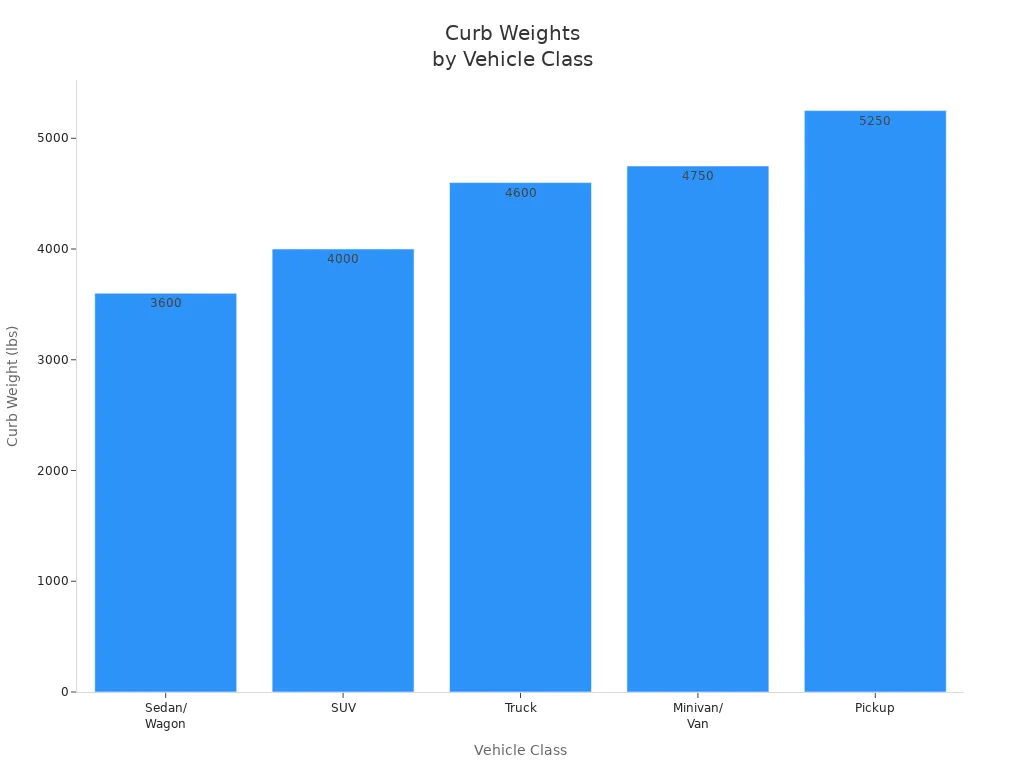
If you drive an SUV, you get more space and safety features. Heavier engines in SUVs help with towing trailers and carrying heavy loads. You might choose an SUV for family trips or outdoor adventures. Car Engine Weight in SUVs affects fuel use and handling, so you need to consider your driving needs before buying.
Pickup trucks use engines built for strength and durability. You often see engine weights in pickup trucks ranging from 400 to 700 pounds (181 to 318 kilograms). These engines need to handle heavy loads and tough driving conditions. Manufacturers design pickup truck engines with larger displacement and stronger materials. You get more torque and towing power with these engines. Many pickup trucks use V6 or V8 engines, which add extra weight compared to smaller vehicles.
If you drive a pickup truck, you notice the engine feels solid and powerful. The extra weight helps when you haul equipment or tow trailers. You also see that diesel engines in pickups can weigh even more, sometimes reaching over 700 pounds. This extra weight gives you better durability and longer engine life. You might choose a pickup truck if you need a vehicle for work, construction, or outdoor activities.
Tip: Heavier engines in pickup trucks improve towing capacity, but they can reduce fuel efficiency. Always consider your driving needs before choosing an engine size.
Sports cars focus on speed and performance. You find engines in sports cars that are larger and heavier than those in regular vehicles. Most sports car engines range from 3.0 to 8.0 liters in size. The weight of these engines usually falls between 600 and 900 pounds. Manufacturers use advanced materials and technology to boost horsepower and acceleration.
Sports car engines often have high displacement for more power.
You see engine weights from 600 to 900 pounds in high-performance models.
Larger engines help sports cars reach higher speeds and quicker acceleration.
When you drive a sports car, you feel the difference in performance. The heavier engine adds stability at high speeds and improves handling. You might choose a sports car if you want excitement and top-tier driving experience. Car Engine Weight in sports cars plays a big role in how the vehicle responds on the road.
Electric vehicles (EVs) use motors instead of traditional engines. You notice that EV motors are lighter than internal combustion engines, but the overall vehicle weight is higher. The main reason is the battery pack. Most EV batteries weigh around 1,000 pounds, which is much heavier than a full fuel tank in a gasoline car. For example, a 13-gallon fuel tank with gasoline weighs about 78 pounds, while an EV battery can weigh over 1,000 pounds.
EVs are generally heavier than similar-sized gasoline vehicles.
The battery adds about 30% more weight to the vehicle.
Some smaller EVs may weigh less than larger gasoline vehicles, depending on the model.
When you drive an electric vehicle, you get instant torque and smooth acceleration. The lighter motor helps with efficiency, but the heavy battery affects handling and range. You might choose an EV for lower emissions and quiet operation. Always consider the total vehicle weight when comparing electric and gasoline cars.
You often find 3-cylinder engines in small cars and compact SUVs. These engines focus on delivering good fuel economy and keeping the vehicle light. Most 3-cylinder engines weigh between 100 and 150 pounds (45 to 68 kilograms). Manufacturers use lightweight materials like aluminum to reduce weight. You get a smooth driving experience with less vibration because modern designs balance the engine well.
If you choose a car with a 3-cylinder engine, you notice quick acceleration in city driving. The lighter engine helps you save money on fuel and makes maintenance easier. You also benefit from lower emissions. Many hybrid and eco-friendly models use 3-cylinder engines to meet strict environmental standards.
Tip: If you want a car that is easy to park and cheap to run, a 3-cylinder engine gives you a smart choice.
You see 4-cylinder engines in many sedans, hatchbacks, and small SUVs. These engines offer a balance between power and efficiency. Most 4-cylinder engines weigh between 200 and 350 pounds (90 to 160 kilograms). You get enough horsepower for highway driving and daily commutes. Manufacturers often use turbochargers to boost performance without adding much weight.
When you drive a car with a 4-cylinder engine, you enjoy reliable acceleration and good fuel economy. The engine stays light enough to keep handling sharp. You also find that maintenance costs remain low. Many popular models use 4-cylinder engines because they fit a wide range of driving needs.
4-cylinder engines work well for families and commuters.
You get a good mix of power and efficiency.
Maintenance stays simple and affordable.
You find V6 engines in midsize sedans, SUVs, and pickup trucks. These engines deliver more power and torque than 4-cylinder models. Most V6 engines weigh between 361 and 450 pounds (164 to 204 kilograms). Manufacturers design V6 engines for smooth performance and strong acceleration. You notice better towing capacity and faster highway speeds.
Here is a table showing how V6 engine weights compare to other engine types:
| Engine Type | Weight (lbs) |
|---|---|
| V6 | 361-450 |
| V8 | 400-700 |
| V10 | 620-712 |
| V12 | 462-772 |
You get a solid driving experience with a V6 engine. The extra weight adds stability and durability. If you need more power for towing or carrying heavy loads, a V6 engine gives you a good option. Car Engine Weight plays a big role in how your vehicle handles and performs.
Note: V6 engines offer a great balance between power and fuel efficiency for many drivers.
You see V8 engines in many trucks, SUVs, and sports cars. These engines have eight cylinders arranged in a V shape. V8 engines usually weigh between 400 and 700 pounds (181 to 318 kilograms). Manufacturers build V8 engines for power and performance. You get strong acceleration and high horsepower. Many drivers choose V8 engines for towing, racing, or heavy-duty work.
V8 engines use more metal and larger parts than smaller engines. You notice that the extra weight adds stability at high speeds. Some sports cars use lightweight materials to keep engine weight down, but most V8 engines remain heavier than V6 or 4-cylinder engines. If you want a vehicle with strong towing capacity or fast acceleration, a V8 engine gives you that advantage.
Tip: V8 engines offer impressive power, but you may see higher fuel consumption and increased maintenance costs.
Diesel engines stand out for their durability and torque. You find diesel engines in trucks, commercial vehicles, and some SUVs. Most diesel engines weigh between 300 and 700+ pounds (136 to 318+ kilograms). The weight comes from reinforced blocks and pistons. Manufacturers design diesel engines to handle high pressure and long hours of operation.
You notice that diesel engines are heavier than gasoline engines with the same displacement. The stronger construction helps diesel engines last longer and perform better under tough conditions. If you drive a diesel truck, you get more torque for towing and hauling. The extra weight also means better durability, especially for work vehicles.
Diesel engines use stronger materials for long life.
You get more torque and better fuel efficiency for heavy loads.
The added weight supports high performance in demanding jobs.
Electric motors power modern electric vehicles. You see that electric motors are much lighter than traditional engines. Most electric motors weigh between 45 and 136 kilograms (100 to 300 pounds). The motor itself is light, but the battery pack adds significant weight to the vehicle.
Here is a table showing the weight and power of popular electric motors:
| Motor Type | Weight (kg) | Power (hp) |
|---|---|---|
| Yasa Axial Flux Motor | 13.1 | 738 |
| Equipmake HPM-400 Motor | 40 | 536 |
You get instant torque and smooth acceleration with electric motors. The lighter motor helps improve efficiency and handling. When you compare Car Engine Weight, electric motors offer a clear advantage in weight savings. You should remember that the battery pack makes the total vehicle weight much higher than gasoline cars.
Note: Electric motors provide quick response and quiet operation, but battery weight affects overall performance and range.
Hybrid engines combine a gasoline engine with an electric motor and a battery pack. You see these engines in many modern vehicles that aim to improve fuel efficiency and reduce emissions. When you look at hybrid engine weight, you notice it sits between traditional combustion engines and fully electric motors.
Hybrid vehicles use a smaller gasoline engine. Manufacturers add an electric motor, a generator, and a lithium-ion battery pack. These extra components increase the total engine weight. For example, a typical hybrid car includes a 15 kWh lithium-ion battery pack. This battery, along with the motor and generator, adds about 200 kilograms (440 pounds) to the vehicle. You get some weight savings from the downsized combustion engine, but the added hybrid parts make the overall engine system heavier than a standard gasoline engine.
You might wonder how hybrid engine weight compares to electric vehicles. Electric cars use much larger battery packs. The average battery in an electric vehicle weighs around 450 kilograms (990 pounds). This battery can make up to 25% of the total vehicle weight. Manufacturers use bigger batteries in electric cars to increase driving range. As a result, electric vehicles are usually heavier than hybrids and traditional cars.
Here is a table that shows how engine weights compare across different vehicle types:
| Engine Type | Typical Engine Weight (kg) | Typical Engine Weight (lbs) |
|---|---|---|
| Gasoline (4-cyl) | 90 - 160 | 200 - 350 |
| Hybrid | 200 - 360 | 440 - 790 |
| Electric Motor | 45 - 136 | 100 - 300 |
| EV Battery Pack | 450 | 990 |
You get several benefits from hybrid engines. The electric motor helps you accelerate smoothly and saves fuel during city driving. The gasoline engine provides extra power for highway speeds. You also notice lower emissions and better fuel economy compared to traditional engines.
Tip: If you want a car that balances fuel savings and performance, a hybrid engine gives you a smart choice. You enjoy quieter operation and fewer trips to the gas station.
Hybrid engines offer a middle ground. You do not get the full weight of an electric vehicle, but you gain efficiency and lower emissions. When you choose a hybrid, you should consider the extra weight from the battery and motor. This weight can affect handling and acceleration. You also need to think about maintenance. Hybrid systems use more parts, so repairs can cost more than with a standard engine.
You see hybrid engines in many sedans, SUVs, and even pickup trucks. Manufacturers continue to improve battery technology and engine design. You benefit from these advances with better performance and longer battery life. Hybrid engines help you drive farther with less fuel and lower your impact on the environment.
When you look at what makes engines heavier or lighter, size and displacement play a big role. Displacement means the total volume inside all the cylinders of an engine. Bigger engines have more cylinders and larger displacement, which leads to more weight. You notice that more cylinders give smoother power and better balance, but they also add complexity and extra pounds.
More cylinders allow for smoother power delivery and better balance, but they also increase weight and complexity.
Vehicles with larger engines are generally heavier and more complex, leading to increased maintenance expenses.
Higher cylinder counts can lead to increased engine displacement, which contributes to the overall weight of the engine, affecting vehicle agility and handling.
Larger engine displacements generally provide more power but also add to the engine's weight and complexity.
If you want more power, you often choose a bigger engine. However, you should remember that extra weight can make your car less agile and harder to handle. When you compare different vehicles, you see that Car Engine Weight changes a lot based on engine size and displacement.
The materials inside your engine make a big difference in how much it weighs. Manufacturers use different metals and alloys to build engine blocks, pistons, and other parts. Aluminum and aluminum-cerium alloys are much lighter than cast iron. When you pick a car with an aluminum engine, you get better energy efficiency because the engine weighs less.
The new aluminum-cerium alloy is lighter than cast iron, which significantly reduces engine weight and improves energy efficiency.
Cast iron, while inexpensive, has a higher density that adds weight to engines, negatively impacting energy efficiency.
The new alloy offers advantages such as good thermal stability and adaptability to various manufacturing methods, which can lead to further weight reductions in engine components.
Lightweight materials can reduce component weight by 10-60% when replacing heavy steel parts, which is crucial for improving vehicle efficiency.
Advanced materials like magnesium and carbon fiber composites can potentially reduce weight by 50-75%, further enhancing performance in vehicles, especially hybrids and electric models.
If you want a car that handles better and uses less fuel, look for engines made with lightweight materials. You also see that advanced materials help electric and hybrid vehicles perform even better by keeping weight down.
Engine design affects weight in many ways. The way manufacturers arrange cylinders, place the engine in the car, and choose materials changes how heavy the engine feels and how the car drives. You can see the impact of different designs in the table below:
| Engine Configuration | Weight Impact | Performance Effect |
|---|---|---|
| Rear-engine | Mixed efficiency profile; can add weight | Improves traction but may require additional solutions |
| Traditional cast iron | Significant front-end weight bias | Affects handling characteristics and performance |
| Aluminum alloys | Reduces weight by up to 40% | Maintains structural integrity under stress |
| Front-engine | Creates front-heavy weight bias | Increases fuel consumption by 3-7% |
| Ideal 50:50 distribution | Maximizes tire grip and neutral handling | Enhances overall vehicle dynamics |
You notice that engines placed in the front make cars heavier at the front, which can change how the car handles. Aluminum alloys help reduce weight and keep the engine strong. Some sports cars aim for a 50:50 weight balance to improve grip and handling. When you choose a car, think about how engine design affects both weight and performance.
Tip: If you want better handling and fuel efficiency, pay attention to engine design and the materials used.
When you look at car engines, you notice that the model year makes a big difference in engine weight. Newer engines often weigh less than older ones. Manufacturers use advanced technology and better materials to reduce weight. You see this change when you compare cars from different decades.
In the past, most engines used heavy iron blocks. Iron gave engines strength, but it also added a lot of weight. Heavy engines made cars slower and less fuel-efficient. You needed more fuel to move the extra weight. Handling felt less responsive, especially in smaller vehicles.
Today, you find that most modern engines use aluminum or aluminum alloys. Aluminum weighs much less than iron. Lighter engines help cars accelerate faster and use less fuel. You also notice that handling improves because the car feels more balanced. Manufacturers continue to look for new materials that can make engines even lighter without losing strength.
Here is a table that shows how engine materials have changed over time and how they affect your driving experience:
| Material Type | Average Weight | Impact on Vehicle |
|---|---|---|
| Iron | Heavier | Reduced efficiency |
| Aluminum | Lighter | Improved handling and fuel efficiency |
You see that the switch from iron to aluminum has made a big impact. Cars built in the 1980s and earlier often had engines that weighed much more than those in cars today. Modern engines can weigh up to 40% less than older models. This weight reduction helps you save money on fuel and enjoy a smoother ride.
Model year also affects engine design. Newer engines use smaller parts and more compact layouts. Turbochargers and direct injection systems allow manufacturers to get more power from less weight. You benefit from these changes with better performance and lower emissions.
Tip: If you want a car that is easy to drive and costs less to run, look for newer models with lightweight engines.
You should also think about how model year affects maintenance. Older engines with iron blocks may last longer, but they often need more repairs. Modern engines use advanced materials that resist wear and corrosion. You spend less time and money on maintenance with a newer engine.
When you shop for a car, check the model year and ask about the engine materials. Newer engines give you better fuel economy, easier handling, and lower repair costs. You get more value and a better driving experience with the latest technology.
Note: Engine weight continues to drop as manufacturers develop new materials and designs. You can expect future cars to be even lighter and more efficient.
You experience a big difference in acceleration and handling when you compare vehicles with different engine weights. The power-to-weight ratio plays a key role. If your car has a lighter engine and high horsepower, you feel quicker acceleration and sharper steering. Supercars use this principle to deliver thrilling performance. Manufacturers often choose lightweight materials to boost the power-to-weight ratio. You notice that a motorcycle with less weight and strong power can beat a heavier car in a short race, even if the car has more horsepower.
The power-to-weight ratio measures how much horsepower your vehicle has compared to its weight.
Lighter vehicles with powerful engines accelerate faster and respond better to steering.
Supercars and sports cars use lightweight engineering to improve acceleration and handling.
Tip: If you want a car that feels quick and agile, look for models with a high power-to-weight ratio.
Engine weight affects how much fuel your car uses. You use less fuel when your vehicle is lighter. Heavier vehicles need more energy to start moving and to keep rolling. This means you spend more money on gas over time. Smaller engines often give you better fuel economy, but the total weight of your car matters just as much. Electric vehicles also show this pattern. A lighter electric motor helps save energy, but a heavy battery pack can lower efficiency.
Lighter vehicles with smaller engines achieve better fuel efficiency.
Heavier vehicles have more inertia and rolling resistance, which increases fuel use.
Fuel economy depends on engine size, vehicle weight, and how you drive.
Note: If you want to save money on fuel, choose a car with a lighter engine and lower overall weight.
You may wonder how engine weight connects to durability. Heavier engines often use stronger materials, which can last longer under tough conditions. Trucks and work vehicles use heavy-duty engines to handle towing and hauling. These engines resist wear and damage better than lighter ones. However, you should know that extra weight can lead to higher maintenance costs and more stress on other car parts. Lighter engines may not last as long in harsh environments, but they offer easier repairs and lower costs.
Heavy engines provide better durability for demanding jobs.
Lighter engines reduce maintenance costs and make repairs simpler.
The right balance between weight and strength gives you a reliable engine for your needs.
Tip: If you need a vehicle for heavy work, choose an engine built for durability. For daily driving, a lighter engine may serve you better.
Car Engine Weight shapes how your vehicle performs, how much fuel you use, and how long your engine lasts. You make smarter choices when you understand these connections.
You might wonder how engine weights look in real cars you see every day. When you compare engines from different models, you notice big differences. Some engines use lightweight materials. Others use heavy-duty parts for more power. Here are some popular engine models and their weights:
ZZ4 Partial Engine: Weighs about 223 pounds. Some people question if this number is accurate.
383 Partial Engine: Comes in at 335 pounds. Many consider this weight reasonable for its size.
572 Tall-Deck BBC: Reaches 580 pounds. This number may include shipping materials.
All-Aluminum SBC: Weighs 366 pounds. This weight does not include the flywheel.
Late Model Vortec SBC: Tips the scale at 476 pounds. This engine was weighed in the same trim as others for a fair comparison.
Coyote 5.0L: Weighs 430 pounds. This number includes the flywheel but not the water pump.
LSX376: Comes in at 589 pounds. This engine uses an iron block and a supercharger.
Motown: Weighs 476 pounds. This number does not include the flywheel or water pump.
You see that engine weights can change based on what parts are included. Some engines get weighed with extra parts like flywheels or alternators. Others do not. Always check what is included when you compare engine weights.
Note: Heavier engines often mean more power, but they can also add weight to your car and affect how it handles.
You can use tables and charts to see how engine weights compare side by side. This helps you understand which engines are lighter or heavier. Here is a table that shows engine weights for some popular models:
| Engine Model | Weight (lbs) | Notes |
|---|---|---|
| ZZ4 Partial Engine | 223 | Skeptical about the accuracy of this weight |
| 383 Partial Engine | 335 | Considered reasonable |
| 572 Tall-Deck BBC | 580 | Doubtful, could be shipping weight |
| All-Aluminum SBC | 366 | Weighed without flywheel, etc. |
| Late Model Vortec SBC | 476 | Weighed in identical trim |
| Coyote 5.0L | 430 | No water pump, includes flywheel |
| LSX376 | 589 | Iron block with supercharger |
| Motown | 476 | No flywheel or water pump |
| Base Engine | 626 | Includes carb, alternator, etc. |
| Original BB | 690 | Quoted weight, compared to measured weight |
You can also see these differences in a chart. The chart below shows how engine weights stack up across these models:
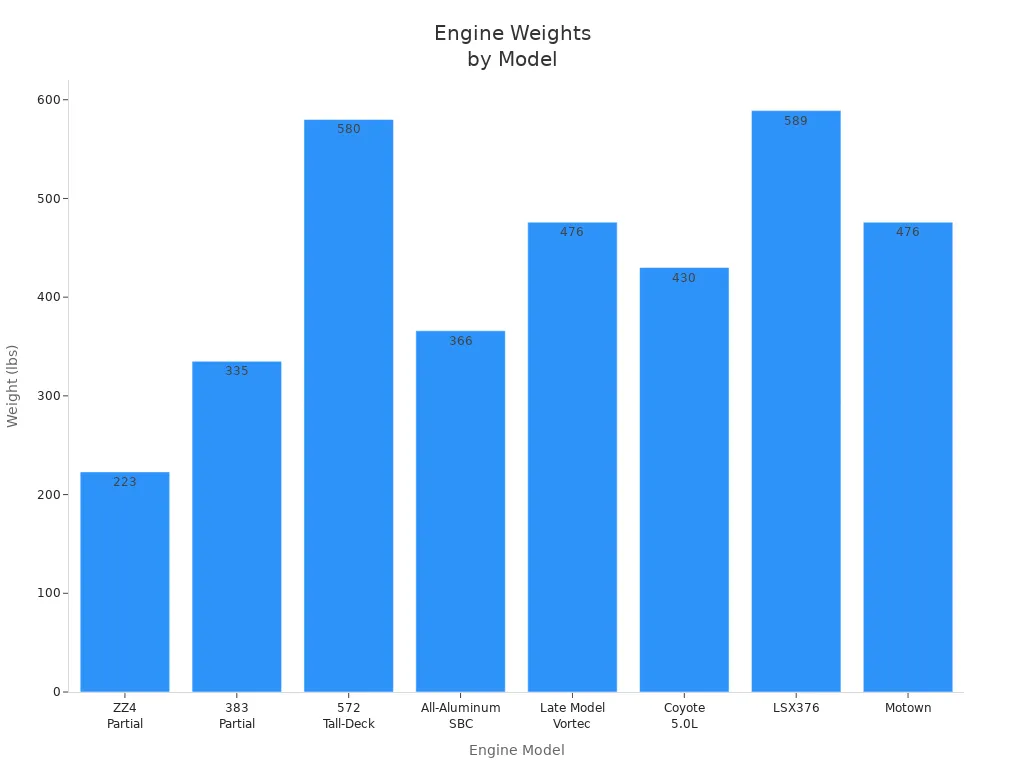
When you look at these numbers, you notice that engine weight can change a lot, even between engines that look similar. Some engines use more aluminum to save weight. Others use iron blocks for strength. You should always think about what you need most—power, durability, or lighter weight—when you choose an engine.
Tip: Use these real-world examples to help you decide which engine fits your needs best. Lighter engines can improve handling and fuel economy. Heavier engines may give you more power and last longer under tough conditions.
You might notice that engine weight affects how much you spend on maintenance and repairs. Heavier vehicles, like trucks and SUVs, often have larger engines with more complex parts. These vehicles usually cost more to maintain. You may need to replace bigger components, and repairs can take longer. Lighter vehicles, especially electric cars, have fewer moving parts. This means you spend less time and money at the repair shop. As engines get heavier and older, maintenance costs rise. If you drive a car with a large engine, you may also see higher repair bills as your vehicle ages or as you drive more miles.
Note: Choosing a lighter engine can help you save money on regular maintenance and unexpected repairs.
Engine weight plays a big role in how much your vehicle can tow or carry. If you drive a truck or SUV, you need an engine that can handle heavy loads. Heavier engines often provide more power and torque. This helps you tow trailers, boats, or campers with ease. You also get better performance when carrying heavy cargo. However, a heavier engine adds to the total weight of your vehicle. This can reduce the amount you can safely carry or tow. You need to balance engine strength with overall vehicle weight to get the best results.
Trucks with heavy engines can tow more, but may use more fuel.
Lighter vehicles may struggle with large loads, even if they have strong engines.
Always check your vehicle’s towing and payload limits before hauling heavy items.
When you think about selling your car, engine weight can affect its resale value. Buyers often look for vehicles that are easy to maintain and fuel-efficient. Cars with lighter engines usually attract more buyers because they cost less to run and repair. Heavy engines may appeal to people who need power for towing or work, but they can scare off buyers worried about high fuel and maintenance costs. If you own a vehicle with a balanced engine weight, you may find it easier to sell and get a better price.
Tip: Keeping your engine in good shape and choosing the right Car Engine Weight for your needs can help protect your car’s value over time.
You have seen that Car Engine Weight depends on several factors. Key points include:
Larger engines and more cylinders add weight.
Aluminum engines weigh less than cast iron ones.
Newer models use lighter materials and advanced designs.
Older engines are often heavier.
Engine weight shapes how your car handles, accelerates, and uses fuel. When you buy, maintain, or upgrade a vehicle, always consider how engine weight fits your needs.
You usually see car engines weighing between 200 and 700 pounds (90 to 320 kilograms). Smaller engines weigh less. Larger engines, like V8s or diesels, weigh more.
You use less fuel with a lighter engine. Heavy engines need more energy to move. You save money on gas when you choose a car with a lighter engine.
You get a lighter motor in an electric vehicle. The battery pack adds most of the weight. This makes the total vehicle heavier than many gasoline cars.
You feel quicker acceleration and sharper handling with a lighter engine. Heavy engines add stability but can slow down response and agility.
You find aluminum and magnesium in many modern engines. These materials weigh less than iron. Manufacturers use them to improve efficiency and performance.
You often see heavier engines built with stronger parts. These engines handle tough jobs and last longer. You may pay more for maintenance over time.
You need a heavier engine for better towing power. Trucks and SUVs use heavy engines to pull trailers and carry loads. Lighter engines may struggle with big jobs.
You spend less on maintenance with a lighter engine. Heavy engines have more parts and may cost more to repair. Electric motors need less maintenance than gasoline engines.
